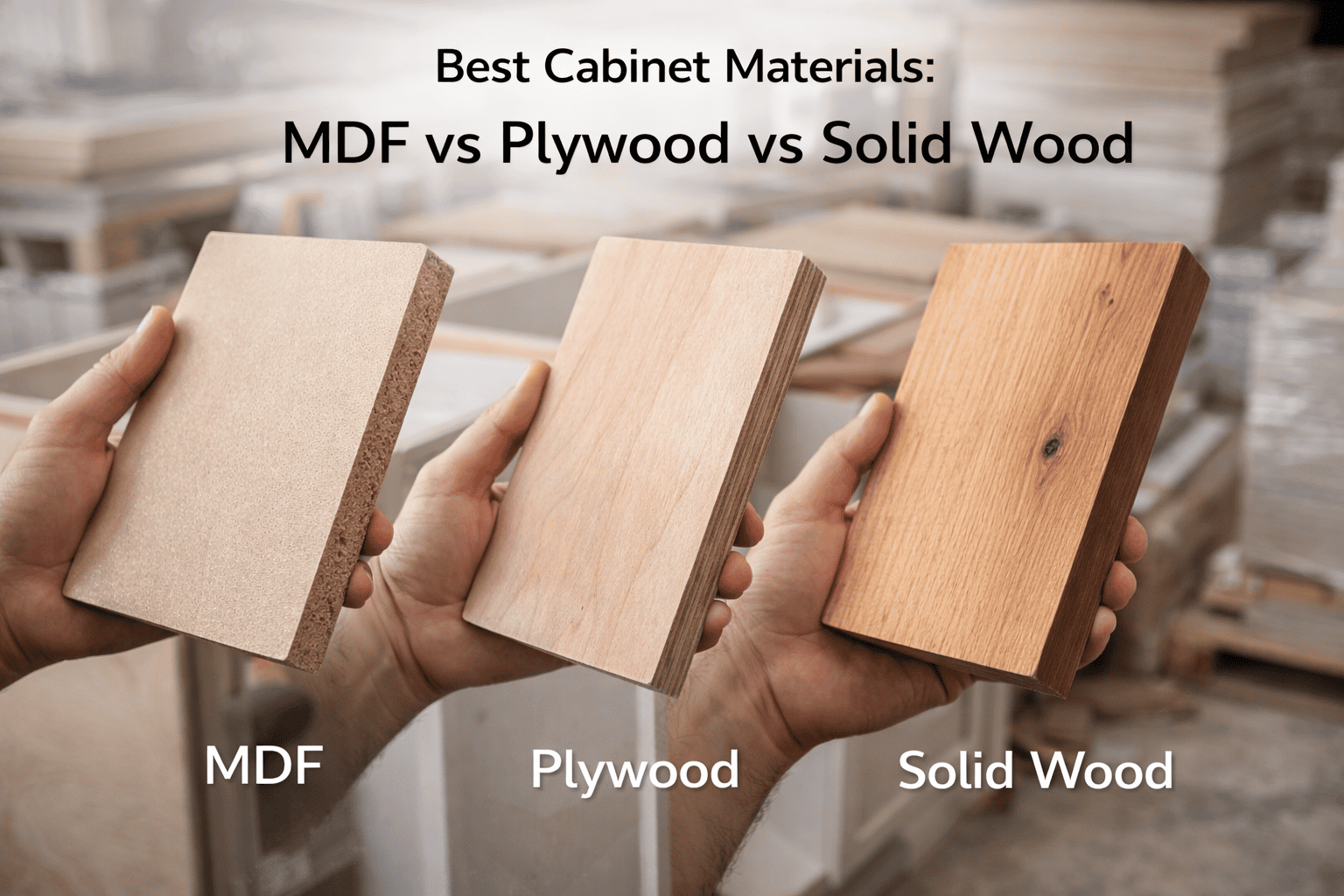
Best Cabinet Materials: MDF vs Plywood vs Solid Wood
Choosing the right cabinet material is one of the most important decisions in any project.
It affects not only cost — but also durability, appearance, and long-term performance.
In this guide, we compare three of the most common cabinet materials: MDF, plywood, and solid wood.
Quick Comparison
| Material | Cost | Durability | Moisture Resistance | Best For |
|---|---|---|---|---|
| MDF | Low | Medium | Low | Budget projects |
| Plywood | Medium | High | High | Most kitchens |
| Solid Wood | High | High | Medium | Premium designs |
What Is MDF?
MDF (Medium Density Fiberboard) is made from compressed wood fibers.
Advantages:
- Smooth surface for painting
- Lower cost
- Consistent structure
Disadvantages:
- Sensitive to moisture
- Less structural strength
- Can swell if exposed to water
What Is Plywood?
Plywood is made by layering thin wood veneers.
Advantages:
- Strong and stable
- Better moisture resistance
- Good balance of cost and performance
Disadvantages:
- Slightly higher cost than MDF
- Edges may need finishing
What Is Solid Wood?
Solid wood is natural timber, often used in high-end cabinets.
Advantages:
- Premium appearance
- Strong and durable
- Natural texture
Disadvantages:
- Expensive
- Can expand or shrink with humidity
- Requires more maintenance
Which Material Is Best for Kitchens?
For most kitchen projects:
👉 Plywood is the best overall choice
Because it offers:
- Good durability
- Better moisture resistance
- Reliable structure
MDF is suitable for budget projects, while solid wood is ideal for premium designs.
Material Selection Tips
- Use plywood for cabinet boxes
- Use MDF for painted doors
- Use solid wood for decorative elements
Combining materials is often the best solution.
Final Thoughts
There is no single “best” material for every project.
The right choice depends on your budget, design goals, and usage environment.
Understanding material differences helps you make smarter decisions.