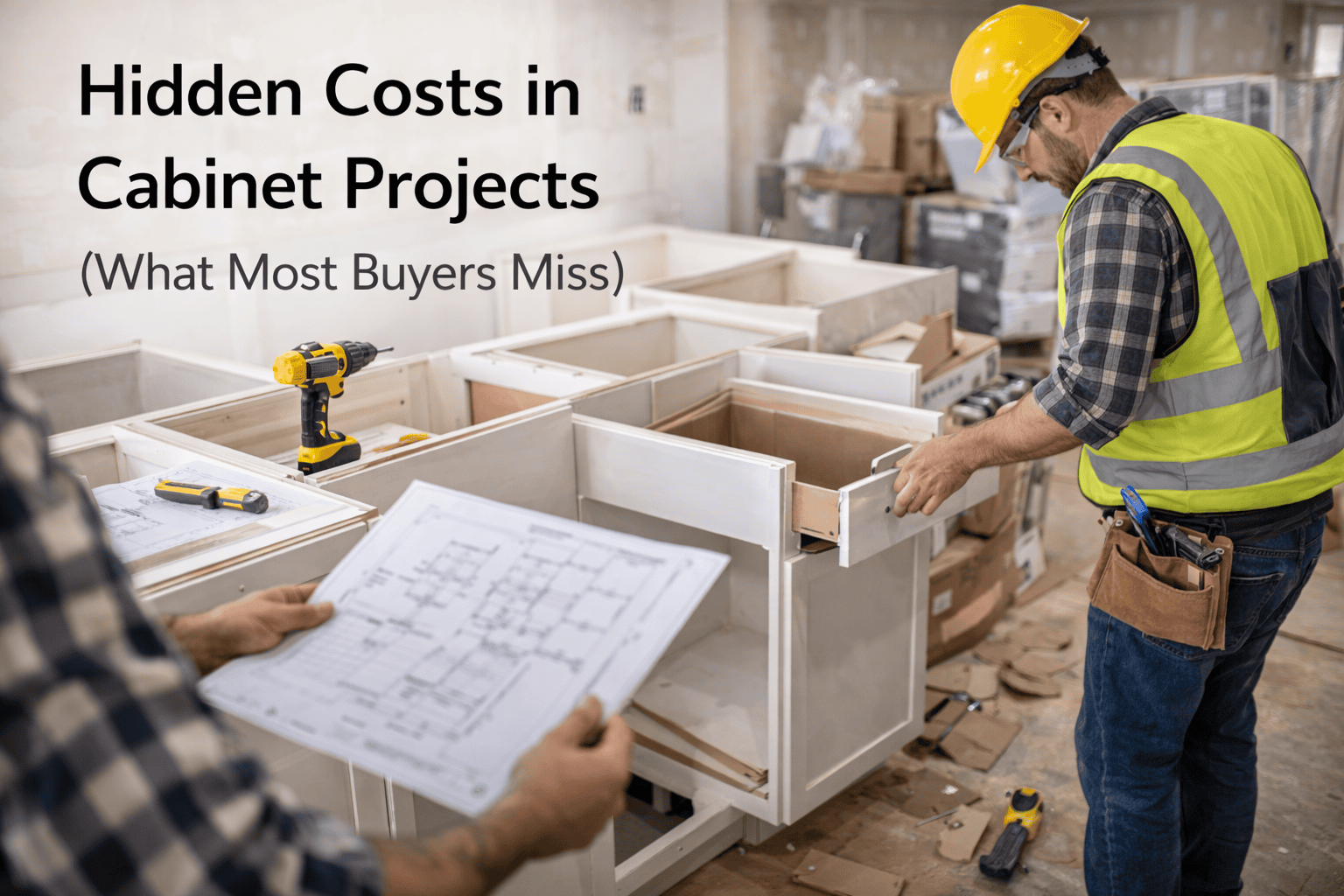
Hidden Costs in Cabinet Projects (What Most Buyers Miss)
When planning a cabinet project, most buyers focus on one thing:
“How much do the cabinets cost?”
But in reality, the biggest cost risks are often hidden — and they usually appear after the order is placed.
The Real Cost Is Not Just the Product
The cabinet price is only one part of the total cost.
A project can become expensive when problems happen during:
- Production
- Shipping
- Installation
- After-sales
1. Missing Parts and Replacements
One of the most common issues in cabinet projects is missing components.
This can happen due to:
- Incomplete packing
- Poor labeling
- Lack of verification before shipment
The real cost:
- Project delays
- Extra shipping fees
- Installation interruption
2. Packaging and Transportation Damage
Cabinets travel long distances, especially in cross-border projects.
If packaging is not strong enough:
- Panels can be damaged
- Edges can chip
- Hardware can be lost
The real cost:
- Replacement time
- Additional logistics cost
- Site disruption
3. Installation Errors
Even good cabinets can become a problem if installation goes wrong.
Common issues:
- Misalignment
- Incorrect assembly
- Wrong installation sequence
The real cost:
- Rework
- Material waste
- Extended labor time
4. Design Changes After Production
Changing design after production starts is one of the most expensive mistakes.
This happens when:
- Design is not fully confirmed
- Details are unclear
- Decisions are rushed
The real cost:
- Reproduction
- Shipping delays
- Increased budget
5. Communication Gaps
In cross-border projects, communication matters more than price.
Problems happen when:
- Drawings are unclear
- Specifications are misunderstood
- Updates are delayed
The real cost:
- Mistakes in production
- Wrong expectations
- Project inefficiency
6. Lack of After-Sales Support
What happens after delivery is often ignored.
Without proper support:
- Replacement takes too long
- Responsibility is unclear
- Problems escalate
The real cost:
- Time loss
- Frustration
- Reputation risk (for builders)
How to Avoid These Hidden Costs
The key is not just choosing a supplier — but choosing a system.
A reliable cabinet supplier should provide:
- Clear design confirmation before production
- Complete BOM and specification control
- Pre-delivery inspection
- Structured packaging and labeling
- Installation guidance
- Defined after-sales process
Final Thoughts
The cheapest quote is not always the lowest cost.
The real cost of a cabinet project depends on how well risks are controlled.
Understanding hidden costs helps you make better decisions — and avoid expensive surprises.