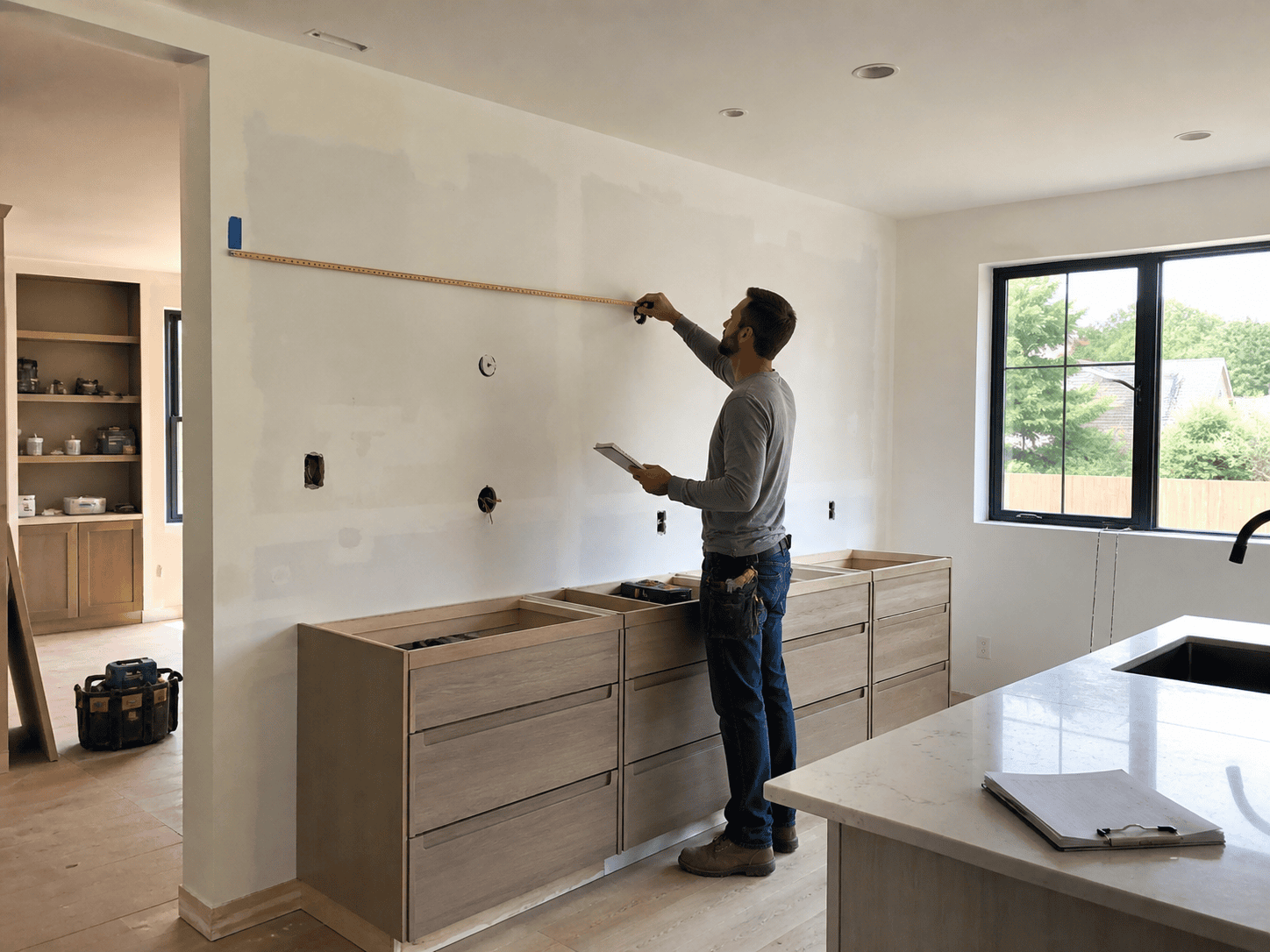
How to Read a Cabinet Drawing Before Production Starts
For many clients, cabinet drawings are one of the most confusing parts of the project.
The design may look clear in conversation, but once drawings are sent for approval, the documents can suddenly feel technical, dense, and easy to misunderstand.
That creates a very practical problem:
How do you review a cabinet drawing properly before production starts?
The good news is that you do not need to be an architect, interior designer, or contractor to check the most important things.
You only need to understand what the drawing is showing, what decisions it confirms, and what details should be checked before the design is locked for production.
This guide explains how to read a cabinet drawing in a practical way.
Why drawing review matters so much
Before production starts, the cabinet drawing becomes one of the most important project documents.
It is not only a visual reference. It is also the basis for:
- dimensions
- layout
- appliance positions
- cabinet structure
- material coordination
- installation preparation
- design approval
If something important is missed at drawing stage, the problem may only appear later during production, shipping, or installation.
That is why drawing review should be treated seriously even if the client is not from a technical background.
What a cabinet drawing usually includes
Cabinet drawing sets may vary, but they often include some or all of the following:
- layout plans
- elevation views
- cabinet dimensions
- section details
- appliance locations
- material notes
- finish notes
- annotations for special conditions
Some projects also include 3D views or rendered visuals, but those should support the drawings, not replace them.
The most important point is simple: drawings are where the actual project decisions are confirmed.
1. Start with the layout, not the small details
When opening a drawing, do not begin by trying to understand every line immediately.
Start with the overall layout.
Ask these questions first:
- Is this the correct room or area?
- Does the arrangement match what I expected?
- Are the tall units, base cabinets, wall cabinets, island, or wardrobes in the right positions?
- Does the movement path in the room still make sense?
- Are doors, windows, and obstacles reflected correctly?
At this stage, you are checking whether the project concept is correct before focusing on technical details.
2. Check the key dimensions
Dimensions are one of the most critical parts of drawing review.
Even if you do not check every small number, you should verify the main dimensions, such as:
- overall wall width
- cabinet run length
- ceiling height
- tall cabinet height
- island size
- countertop length
- key gaps between elements
- appliance spaces
If something feels unusually tight, oversized, or inconsistent with your site, that should be clarified before approval.
A good review does not require memorizing every number. It requires spotting anything that looks wrong for the actual space.
3. Confirm doors, windows, and fixed site conditions
One of the easiest ways for a cabinet project to go wrong is when fixed site conditions are not reflected properly in the drawing.
Please check whether the drawing shows:
- correct door positions
- correct window positions
- window sill height if relevant
- columns or beams
- bulkheads
- boxed-out pipes
- uneven walls if already known
- plumbing and electrical points if they affect the layout
A cabinet layout may look beautiful in isolation, but if it ignores site conditions, the project can become much harder to install later.
4. Review appliance positions carefully
For kitchens, laundry rooms, and some wardrobe or utility spaces, appliance coordination matters a lot.
Check whether the drawing reflects:
- refrigerator position and size
- oven position
- dishwasher position
- washing machine or dryer space
- hood and cooktop location
- sink position
- any built-in appliance housing
If appliances have already been selected, compare the drawing with the actual model dimensions where possible.
Small appliance mistakes can create major revision issues later.
5. Understand the difference between plan view and elevation view
Clients often get confused because cabinet drawings usually show the same space in different ways.
The two most common are:
- plan view: looking down from above
- elevation view: looking directly at a wall from the front
Plan view helps you understand layout and movement.
Elevation view helps you understand cabinet height, alignment, door arrangement, shelf position, and visual composition.
When reviewing drawings, do not rely on only one view. Use both together.
That usually makes the design much easier to understand.
6. Check cabinet function, not only appearance
A drawing is not only about what looks good. It is also about how the cabinets will work.
Review questions like these:
- Are drawers placed where they are most useful?
- Are tall units in practical positions?
- Is the storage type suitable for the way the space will be used?
- Are corner conditions handled logically?
- Is the island functional, not just attractive?
- Is wardrobe hanging space or folded storage balanced correctly?
- Are there any cabinet doors that may clash with another element?
In other words, do not approve the drawing only because it looks clean. Make sure it also works in daily use.
7. Review alignment and proportions
Clients do not need to calculate design ratios, but they should still review general alignment.
Look at:
- top lines of cabinets
- relationships between tall units and wall cabinets
- symmetry where relevant
- visual balance around windows or feature areas
- consistency of door divisions
- how full-height cabinetry meets the ceiling
This is especially important in projects where the visual result matters as much as storage function.
8. Confirm materials and finish notes
Sometimes the drawing set includes notes about materials, finishes, or hardware.
These notes may cover:
- door finish
- cabinet body finish
- open shelf finish
- glass details
- handle or handle-free system
- internal accessories
- countertop type if included
Do not assume the visual drawing alone is enough.
A clean elevation may still need written notes to confirm what material or finish is actually intended.
9. Pay attention to revision version
Before approving anything, make sure you are reviewing the correct version.
Always check:
- drawing date
- version number
- revision status
- whether this is a draft or final review set
This is especially important when multiple revisions have been discussed by message.
Clients sometimes approve a drawing while referring mentally to a different version. That creates avoidable confusion later.
10. Mark questions clearly before approval
If something is unclear, do not approve first and ask later.
Instead, note your questions clearly.
For example:
- “Please confirm this appliance width.”
- “Please check whether this tall cabinet reaches full ceiling height.”
- “Please confirm whether this filler panel is necessary.”
- “Please update the sink position based on the latest plan.”
- “Please confirm the final finish for this wall cabinet section.”
Clear review comments make the approval process much safer and more efficient.
Common mistakes clients make when reviewing cabinet drawings
A few issues happen often:
Approving based only on the rendering
Renderings help communicate style, but they are not enough to confirm all production details.
Ignoring dimensions because the drawing looks correct
Something can look visually fine and still be dimensionally wrong.
Not checking appliance information
Appliance mistakes often become expensive later.
Focusing only on color and style
Storage function, alignment, and site conditions matter just as much.
Approving the wrong version
Version confusion creates preventable errors.
What to confirm before production starts
Before giving final approval, it is wise to confirm these points:
- overall layout is correct
- major dimensions are correct
- site conditions are reflected correctly
- appliance locations are correct
- storage logic works for daily use
- materials and finishes are confirmed
- the drawing version is the latest approved version
If these points are clear, approval becomes much safer.
Final thoughts
Cabinet drawings may look technical, but clients do not need to understand every drafting convention to review them well.
What matters is checking the right things before production starts.
At COZI Cabinet, drawing approval should help clients feel clearer, not more confused. With the right review process, cabinet drawings become a useful decision tool instead of a difficult document to fear.