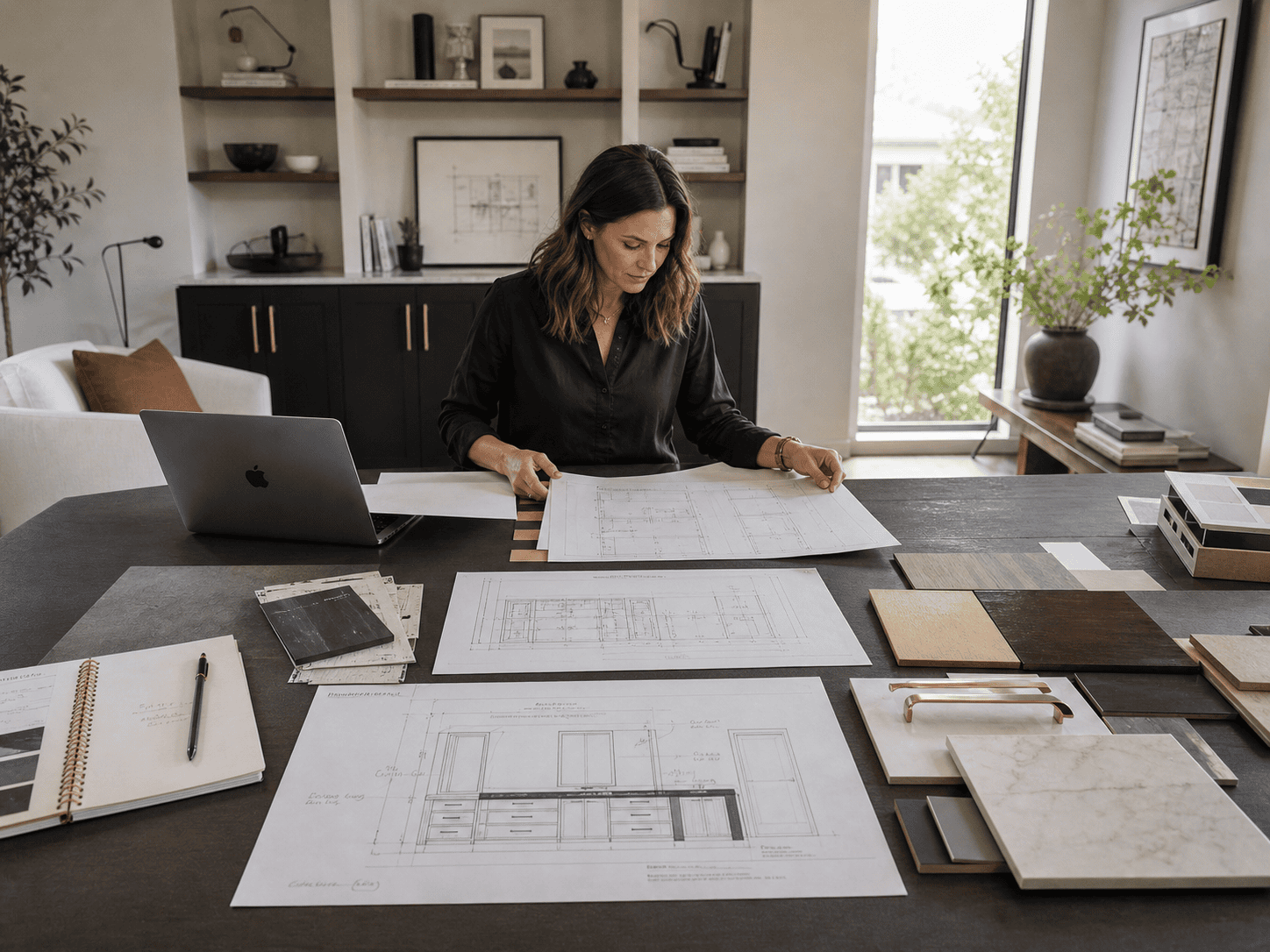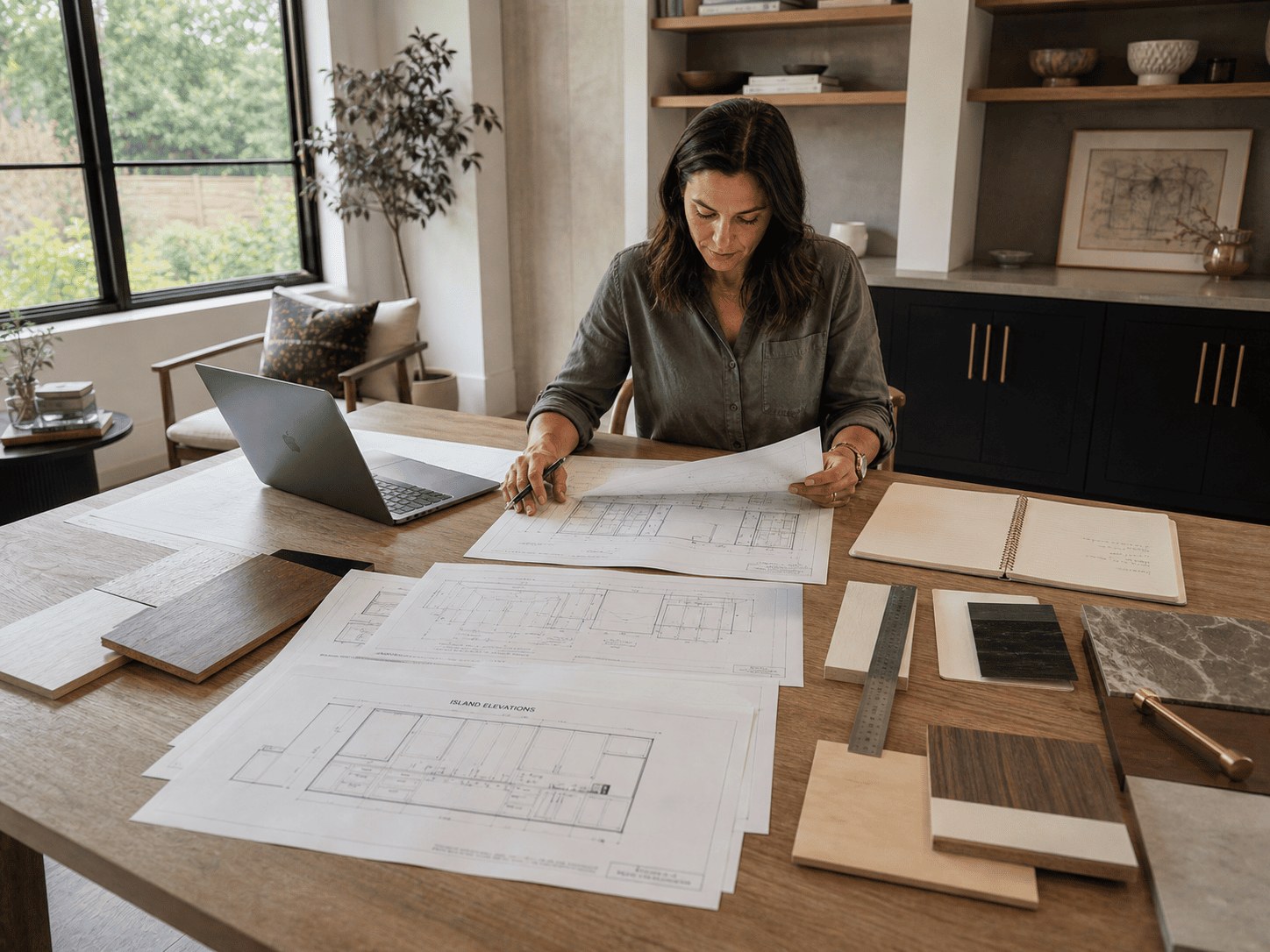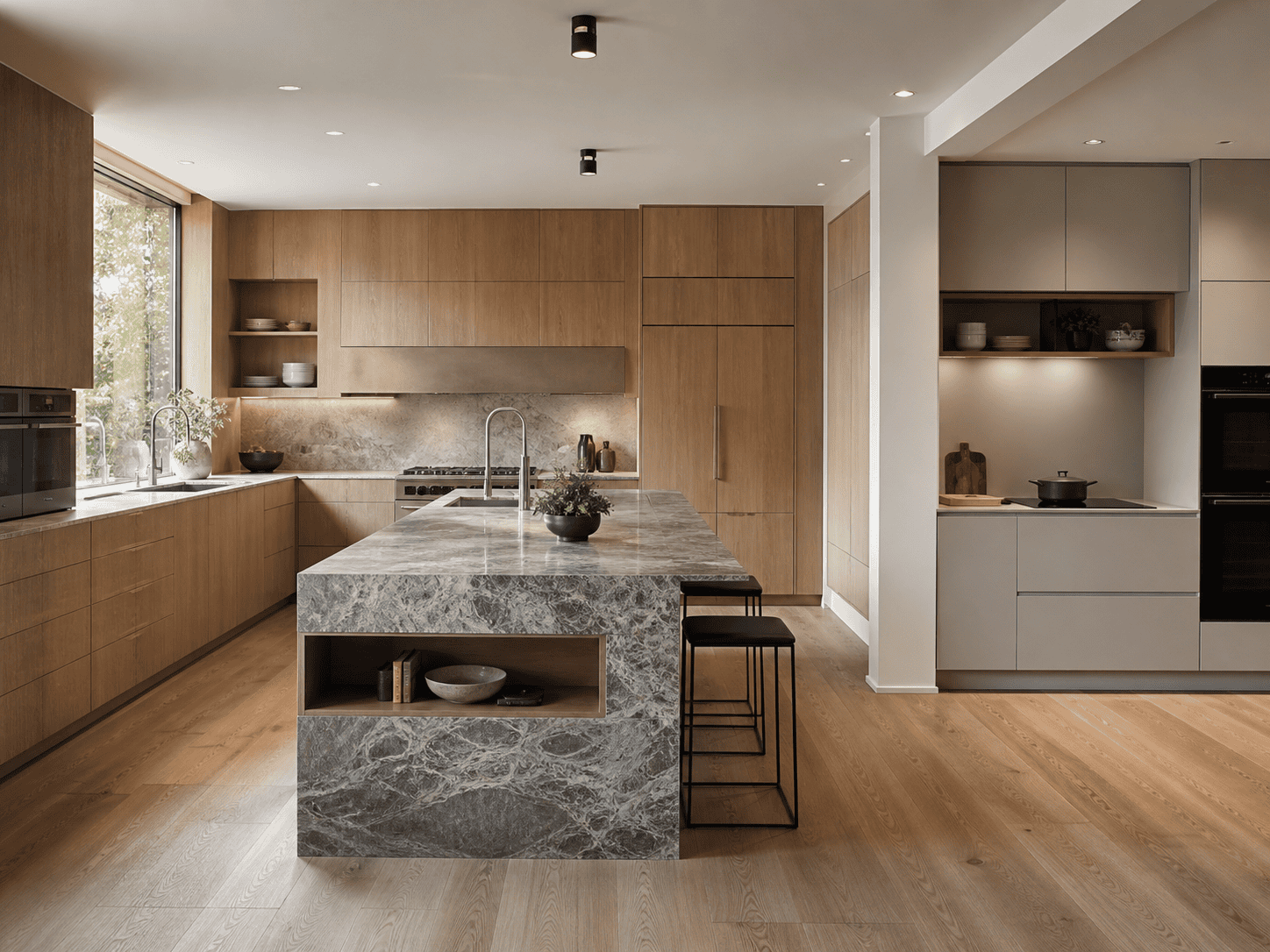
How to Measure Your Space for Custom Cabinets Before Asking for a Quote
If you are planning custom cabinets for a kitchen, wardrobe, laundry room, or another space, one of the first questions you may ask is: what do I need to send before getting a quote?
The answer is simple: the clearer your measurements, the more useful your quotation will be.
At COZI Cabinet, many of our overseas clients start by sending basic site information before the design phase begins. You do not need professional construction drawings at the beginning, but you do need enough information for us to understand the space, the layout, and the possible design direction.
This guide explains how to measure your space step by step before asking for a custom cabinet quote.
Why measurements matter before quotation
A preliminary quotation is usually based on the information provided by the client. If the measurements are incomplete or unclear, the quotation can only be rough.
Better measurements help us:
- understand the actual size of the space
- identify layout limitations earlier
- estimate cabinet quantity more accurately
- reduce revisions during the design stage
- communicate faster across countries and time zones
For custom projects, even simple dimensions can make a big difference.
What you need before you start
You do not need special equipment. In most cases, these are enough:
- a tape measure
- your phone for photos and videos
- a notebook or printed sketch
- a pen or marker
- if possible, a laser measure for longer walls
It is also helpful to measure when the site is bright and easy to photograph.
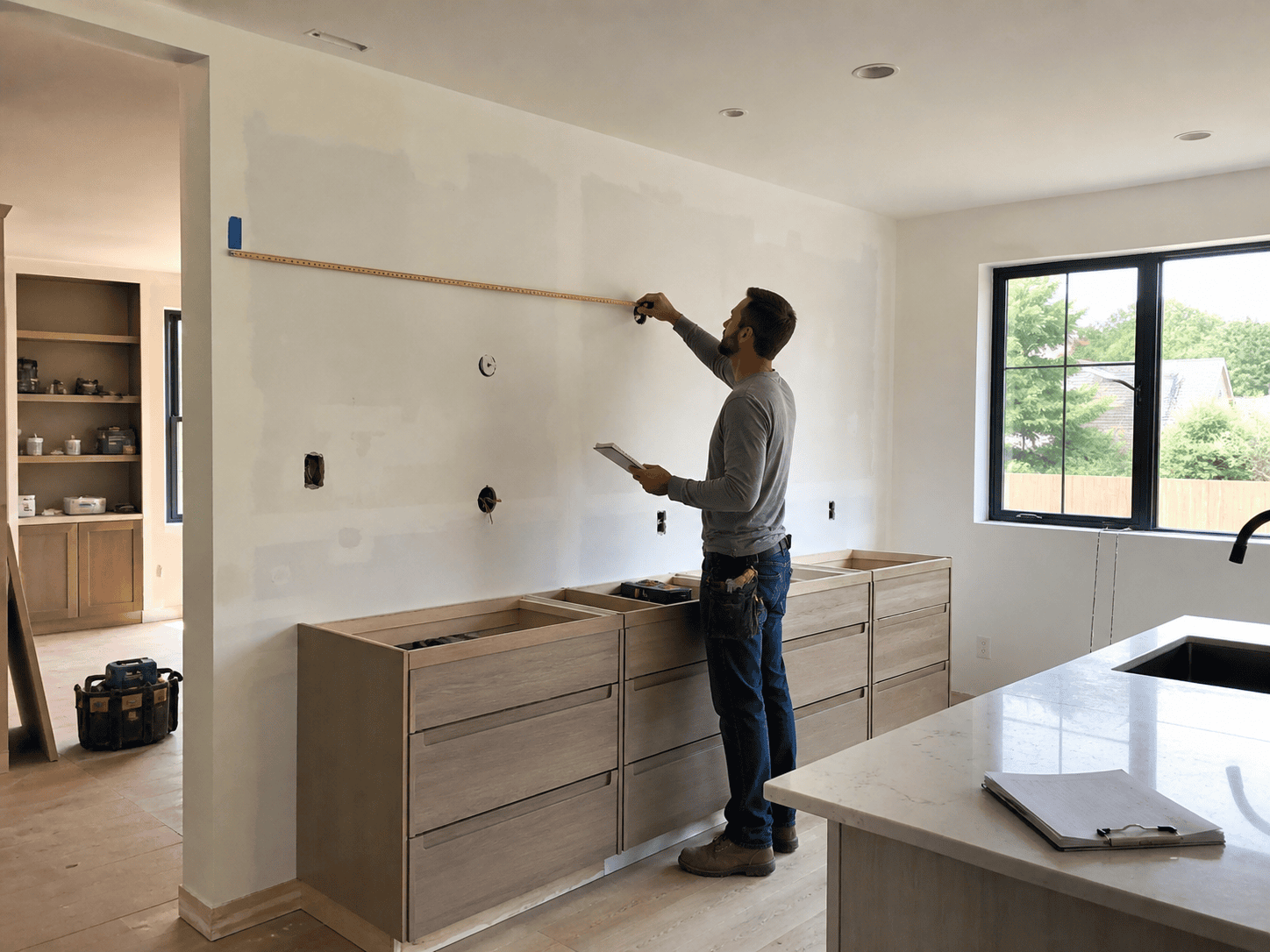
Step 1: Measure the overall wall dimensions
Start with the full space, not the cabinets.
For each wall where cabinets may be installed, record:
- total wall width
- total wall height
- depth of the available area if relevant
- floor-to-ceiling height
- corner dimensions for L-shaped or U-shaped layouts
Measure each wall separately and label them clearly. For example:
- Wall A: 3680 mm
- Wall B: 2410 mm
- Ceiling height: 2800 mm
If the room is not perfectly square, note that as well.
Step 2: Mark doors, windows, and fixed openings
After recording the full wall dimensions, add all openings and structural features.
Please include:
- door width and height
- window width and height
- distance from window edge to side wall
- distance from floor to bottom of window
- beam positions
- columns or boxed-out pipes
- ceiling drops or bulkheads
These details affect cabinet layout, countertop height, tall unit placement, and visual balance.
Step 3: Identify plumbing, electrical, and appliance positions
This is especially important for kitchens, laundry rooms, and bathroom vanities.
Please note the location of:
- water inlet and outlet points
- floor trap or drain positions
- gas points if applicable
- power sockets
- switches
- oven, dishwasher, refrigerator, hood, or washing machine positions
Even if the final design may change later, your current site condition helps us judge what is practical and what needs adjustment.
Step 4: Take straight-on photos of every wall
Photos are just as important as dimensions.
Please take clear photos of:
- each full wall
- corners
- doors and windows
- floor and ceiling condition
- utility points
- any uneven areas or obstacles
Try to stand back and photograph each wall as directly as possible. Avoid dark lighting or very close-up angles unless you are showing a specific detail.
A short walkthrough video is also very helpful.
Step 5: Draw a simple sketch
Your sketch does not need to be beautiful or technical.
A basic hand sketch is enough if it includes:
- wall labels
- main dimensions
- door and window positions
- appliance locations
- notes for special conditions
You can draw it on paper and send a phone photo. A simple sketch often communicates faster than long text messages.
Step 6: Tell us what you want to include
Measurements show the space. Your requirements show the project direction.
When sending an inquiry, it helps to include:
- which area you want to customize
- preferred style
- preferred material or finish
- whether you want base cabinets, wall cabinets, tall units, wardrobes, island units, or integrated wall panel systems
- whether appliances are already selected
- your target budget range
- your country and city
- whether installation is needed
This allows us to match the design direction with the practical site condition from the beginning.
Common mistakes to avoid
Measuring only one part of the wall
Some clients measure only the cabinet section they imagine, but not the whole wall. We need the full wall first.
Forgetting ceiling height
Tall cabinets, wardrobes, and full-height storage all depend on ceiling data.
Missing window sill and beam dimensions
These small details can affect the entire layout.
Sending photos without dimensions
Photos help, but without numbers, the quotation remains too general.
Using unclear units
Please use one consistent unit, preferably mm.
What if you cannot measure perfectly?
That is okay.
At the quotation stage, a preliminary estimate can still be prepared based on the information available. After the design develops and material selections are confirmed, a more accurate quotation can be provided.
In other words:
- early quotation = based on the information you provide
- final quotation = based on confirmed design and materials
So even if your first measurements are simple, sending them clearly is always better than waiting too long.
What to send us for a faster cabinet quote
To help us review your project efficiently, please send:
- site dimensions
- a simple sketch
- photos of the full area
- appliance information if available
- your style preference
- your location
- whether you need installation support
COZI Cabinet works with overseas clients on custom cabinetry and integrated door-wall-cabinet solutions. The clearer your initial information is, the faster we can move into useful layout discussion and quotation.
Final thoughts
You do not need perfect technical drawings to start a custom cabinet project. What matters is providing a clear picture of the space.
A few accurate measurements, labeled photos, and a simple sketch can save a lot of time later.
If you are preparing for a custom cabinet quotation, start by measuring the full space first, then send the details clearly. That gives both sides a stronger starting point for design, pricing, and project planning.