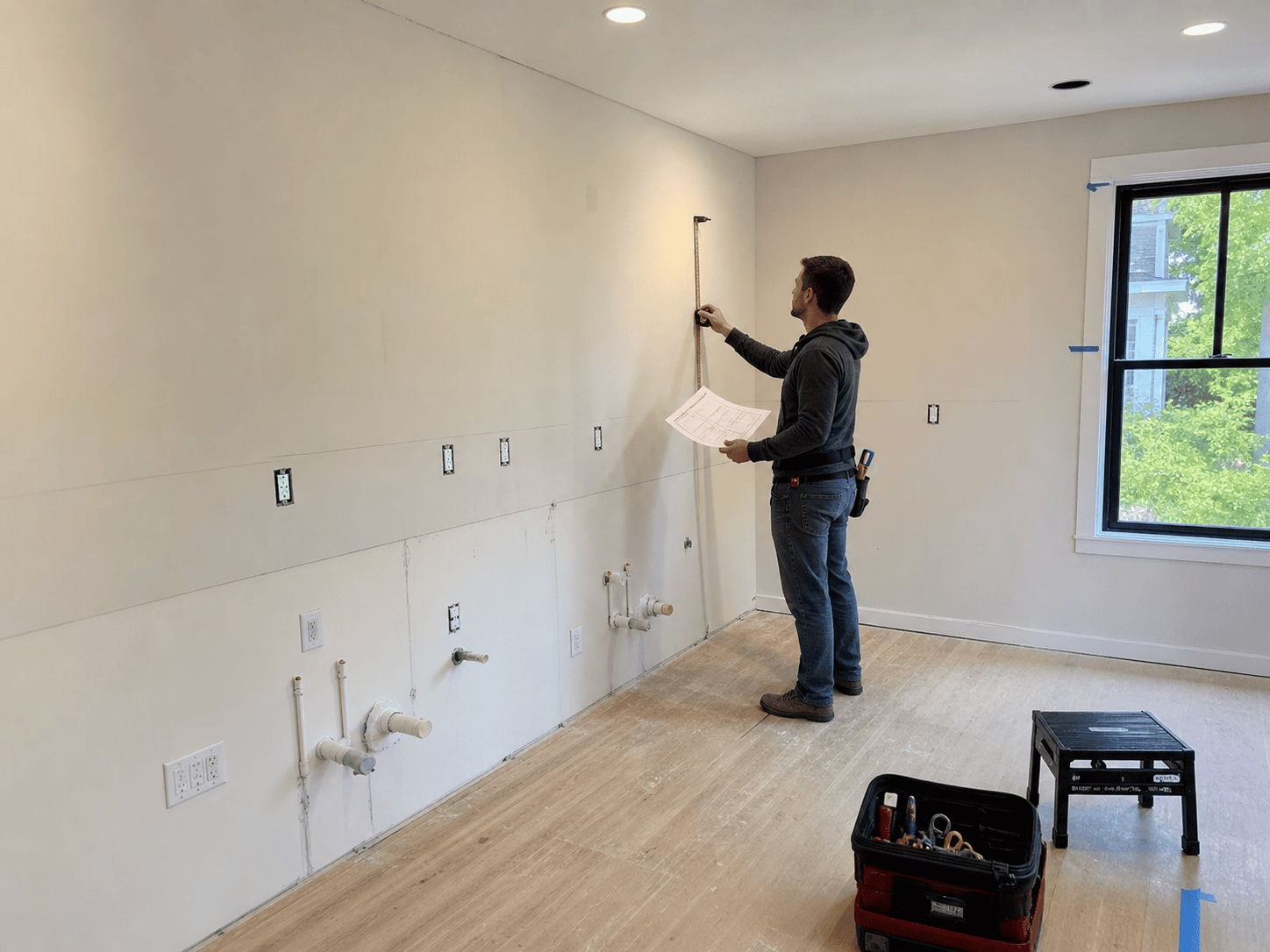
How to Prepare Your Site Before Custom Cabinets Arrive
For many homeowners, the cabinet order feels like the main job.
But in reality, a smooth cabinet project depends on more than design, pricing, and production.
It also depends on whether the site is ready when the cabinets arrive.
This is one of the most overlooked parts of the process.
A project can be delayed, complicated, or made harder to install not because the cabinets are wrong, but because the site is not properly prepared in advance.
So an important question is:
What should be ready before custom cabinets arrive?
In this guide, we explain the key site conditions homeowners should check before delivery and installation.
Why site preparation matters
Custom cabinets are made for a specific space.
That means installation depends on the actual site conditions matching the confirmed design as closely as possible.
If the site is unfinished, inaccurate, blocked, uneven, or missing key utility preparation, the installation stage becomes more difficult.
Site preparation matters because it affects:
- installation efficiency
- dimensional accuracy
- appliance fitting
- countertop coordination
- project timing
- risk of delay
- quality of the final result
A strong cabinet project is not only about making the products correctly. It is also about preparing the space correctly.
1. The main wall and floor finishes should be ready
Before cabinets arrive, the major site finishes should usually be in a stable and confirmed condition.
This often includes:
- finished wall surfaces where cabinets will be installed
- finished floor level
- completed ceiling condition where relevant
- tiled or painted surfaces that affect cabinet fit
- no unfinished wet work in the cabinet zone
Why does this matter?
Because late changes to wall, floor, or ceiling finishes can affect dimensions, alignment, and installation conditions.
If the room is still changing after cabinets are produced, problems can appear even if the design itself was correct.
2. Final site dimensions should match the confirmed design basis
Custom cabinets depend on dimensions.
That means the site should not shift significantly after the design is approved and production has started.
Please check whether:
- walls are built as expected
- finished thicknesses match the design assumption
- bulkheads or ceiling drops are completed correctly
- boxed-out pipes or columns match the confirmed dimensions
- window and door positions have not changed
- appliance openings are still accurate
Even small site changes can affect a custom cabinet installation more than many clients expect.
3. Plumbing points should be ready and correctly positioned
For kitchens, vanities, and laundry rooms, plumbing preparation is essential.
Before delivery, check whether:
- water inlet points are completed
- drainage points are completed
- pipe locations match the design basis
- sink and appliance plumbing positions are confirmed
- no last-minute rerouting is still pending
If plumbing points are incorrect or unfinished, installation may be delayed or require on-site adjustment that could have been avoided earlier.
4. Electrical points should be confirmed in advance
Electrical preparation is another major part of site readiness.
This may include:
- power sockets for appliances
- lighting points if relevant
- switch positions
- power supply for built-in ovens, hoods, or refrigerators
- socket locations for laundry appliances
- special power requirements for integrated systems
Electrical points should be coordinated before the cabinets arrive, not after installation begins.
A cabinet installation should not be used to discover that an outlet is blocked, misplaced, or missing.
5. Appliance information should already be finalized
Cabinet fit often depends on appliance dimensions.
So before cabinets arrive, it is important that:
- selected appliance models are already confirmed
- dimensions are accurate
- opening requirements are known
- installation requirements are understood
- appliance delivery timing is coordinated if relevant
If appliance selections change late, the cabinet layout may no longer match as intended.
This is especially important for:
- ovens
- refrigerators
- cooktops
- hoods
- dishwashers
- washing machines
- dryers
6. The site should be clean enough for organized installation
Cabinet installation works much better when the site is reasonably clear and accessible.
This means the cabinet area should ideally be:
- free from construction debris
- dry and safe to work in
- not blocked by unrelated materials
- organized enough for unpacking and part identification
- ready for installers to move through efficiently
A crowded or unfinished site increases the chance of confusion, damage, and delay.
7. Access conditions should be checked before delivery
Sometimes the cabinets are ready, but the site is difficult to reach.
That is why access planning matters too.
Before delivery, consider:
- lift access
- stair width
- corridor clearance
- door opening width
- unloading area
- parking or delivery restrictions
- building management requirements if relevant
For apartments, high-rise projects, or properties with limited access, this step can be especially important.
8. The installation area should be protected from avoidable risk
Before cabinet arrival, the site should also be protected from conditions that may create unnecessary damage.
For example:
- avoid ongoing wet trades in the cabinet zone
- avoid stacking unrelated heavy materials where cabinet parts will be unpacked
- avoid uncontrolled dust or moisture if possible
- avoid unfinished site work that may interfere with cabinet handling
Cabinet products do not perform well in a space that is still being treated like a rough construction zone.
9. The installer should have the latest drawings and references
Site readiness is not only physical. It is also informational.
Before installation begins, the responsible team should have access to:
- the latest approved drawings
- installation guidance if provided
- part labels or packing identification
- appliance information
- any important site notes
- a clear point of contact for questions
Even if the site itself is ready, installation can still become inefficient if the information on site is incomplete or outdated.
10. Timing between site readiness and cabinet arrival should be coordinated
Timing matters just as much as preparation.
If the cabinets arrive too early, the site may still be unfinished.
If the site becomes ready too late, installation may be delayed unnecessarily.
That is why the cabinet arrival schedule should be coordinated with:
- renovation progress
- appliance timing
- countertop timing if relevant
- installer availability
- site access arrangements
- final readiness of the cabinet zone
The goal is not only to have the products delivered. It is to have them delivered when the site can actually receive them properly.
Common site preparation mistakes
A few problems happen often:
Assuming the site can be adjusted after the cabinets arrive
Custom cabinet projects work best when major conditions are prepared in advance.
Leaving plumbing or electrical confirmation too late
This often creates avoidable installation issues.
Not confirming finished floor and wall conditions
Final finishes can affect dimensions more than expected.
Ignoring building access
Delivery problems are not always about the product. Sometimes they are about the route.
Letting the site stay too chaotic
A disorganized site makes installation slower and riskier.
A simple site-readiness checklist
Before custom cabinets arrive, it is wise to confirm:
- wall, floor, and ceiling conditions are stable
- plumbing points are ready
- electrical points are ready
- appliance selections are confirmed
- site dimensions still match the approved design
- access conditions are workable
- installation area is clean and clear
- the latest drawings are available on site
- delivery timing matches actual site readiness
If these points are in place, installation usually becomes much smoother.
Final thoughts
Custom cabinets do not only need good design and careful production.
They also need a prepared site.
At COZI Cabinet, site readiness is one of the most important factors in helping delivery and installation go more smoothly. The more clearly the site is prepared before cabinet arrival, the easier it becomes to protect quality, avoid delays, and achieve a better final result.